

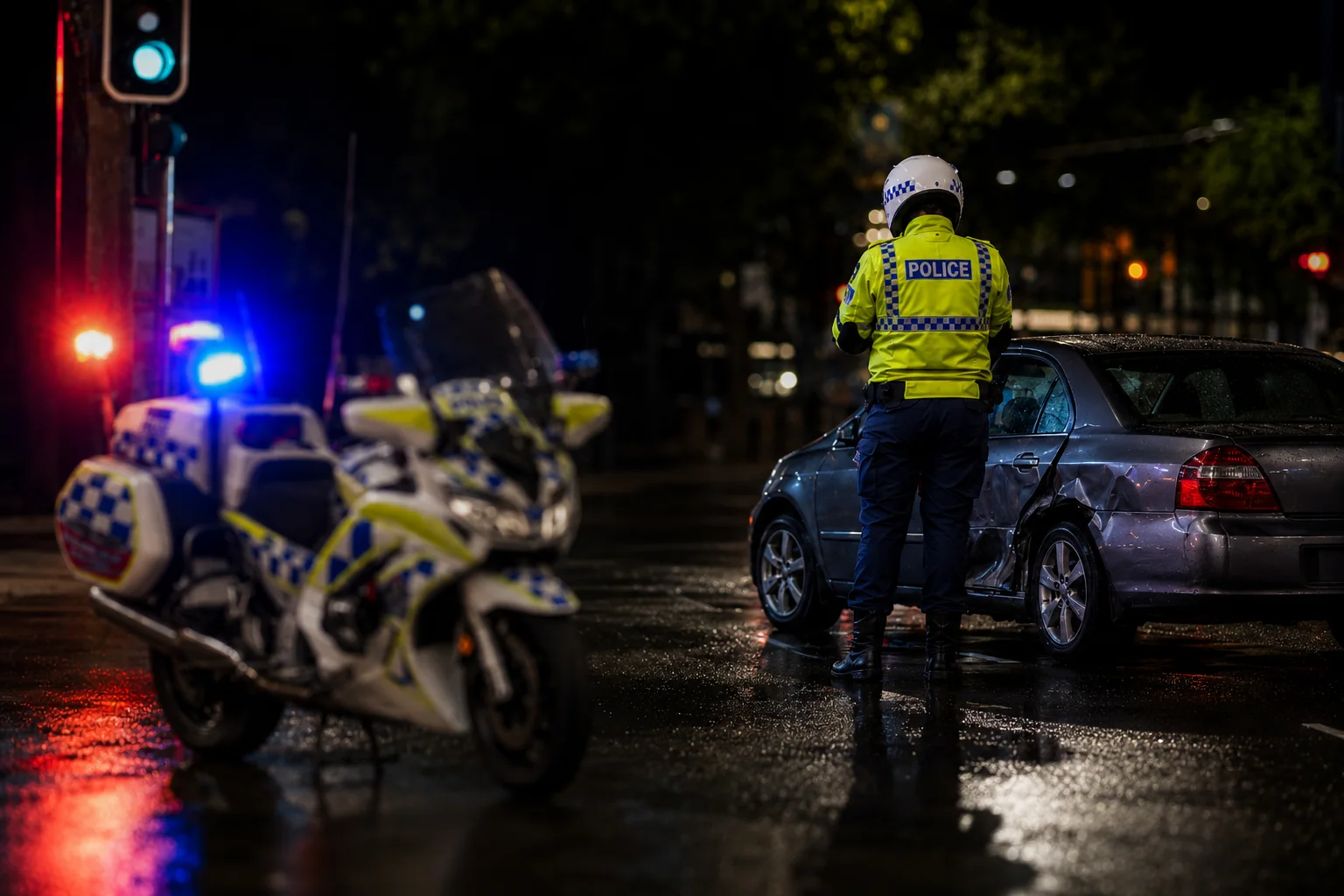
Dangerous driving?
If you’re reading this page, then you’re probably wondering what happens after you’ve been involved in a traffic accident. You might have already been charged by police, or you might be waiting for them to contact you.
Your accident might have been because you were driving poorly on the road, under the influence of drugs or alcohol, or acting out of road rage. But you might have simply made a mistake, or done nothing wrong.
Whatever the case might be, it is vital that you engage an experienced criminal lawyer to represent you and protect your future.
Careless vs dangerous driving: what’s the difference?
When investigating a traffic incident, police can choose to charge you with either careless driving, or dangerous driving. The main distinction between these two offences is that dangerous driving is a criminal offence under s 328A of the Criminal Code (Qld) (called Dangerous Operation of a Vehicle), whereas careless driving is a traffic offence under s 83 of the Transport Operations (Road Use Management) Act 1995, called Careless Driving of Motor Vehicles.
This distinction matters for your ultimate sentence: dangerous driving carries far higher maximum penalties and a permanent criminal record, while careless driving is dealt with as a traffic matter.
What is the maximum penalty for dangerous driving in Queensland?
Penalties for s 328A were increased by the Queensland Community Safety Act 2024 (assented 30 August 2024, as at 19 August 2026). The current maximum penalties are:
| Circumstance | Maximum penalty |
|---|---|
| Simple offence | 3 years imprisonment (or 200 penalty units) |
| Aggravated circumstances (excessive speed, intoxication, unlawful racing, a relevant prior conviction, or, since the 2024 reform, recording or “advertising” the offending, including on social media) | 5 years imprisonment (or 400 penalty units) |
| Causing death or grievous bodily harm | 14 years imprisonment |
| Causing death or grievous bodily harm with an aggravating circumstance (e.g. excessive speed, intoxication, leaving the scene, evading police) | 20 years imprisonment |
A conviction also carries a minimum 6-month licence disqualification. To prove the driving was “dangerous”, police must show the manner of driving, not just the outcome, was dangerous to the public, considering factors such as road and vehicle condition, traffic and pedestrians present, and whether drugs or alcohol were involved.
⚠ The law is changing. The Criminal Code (Dangerous Driving) and Other Legislation Amendment Bill 2026 was passed by Parliament on 17 September 2026 and, as at 21 September 2026, is awaiting assent. It starts on 1 March 2027. From that date s 328A is replaced with new dangerous driving offences. For motor vehicles, the maximum penalties will be 5 years (simple) or 7 years (with a circumstance of aggravation) where no death or grievous bodily harm is caused, and 16 years (simple) or 25 years (with a circumstance of aggravation) where death or grievous bodily harm is caused. The Government has said the new law also increases minimum licence disqualification periods and expands mandatory imprisonment for serious and repeat offenders. Offences committed before 1 March 2027 will still be dealt with under the current law, so treat the table above as the law until then.
What is the maximum penalty for careless driving in Queensland?
To be charged with careless driving, police must prove you drove “without due care and attention or without reasonable consideration for other persons using the road”: a less serious allegation than dangerous driving, often involving a momentary lapse, excessive speed for the conditions, or a lost-control accident.
| Circumstance | Maximum penalty |
|---|---|
| Simple offence | 6 months imprisonment (or 40 penalty units) |
| Causing death or grievous bodily harm (licensed driver) | 1 year imprisonment (or 80 penalty units) |
| Causing death or grievous bodily harm (unlicensed driver) | 2 years imprisonment (or 160 penalty units) |
Where death or grievous bodily harm is caused, there is a minimum 6-month licence disqualification in addition to any penalty imposed. As at 1 July 2026 a penalty unit is $172.70, so the maximum fine for a simple offence is $6,908.
Will I go to jail for dangerous or careless driving?
Every case turns on its own facts, but as a general guide: for dangerous driving causing death or grievous bodily harm, a prison sentence is the most common outcome, though it is not automatic, and a well-prepared case, addressing genuine remorse, your driving history, and steps already taken (such as road safety programs or medical treatment), can make the difference to whether time is actually served. Careless driving matters, even those causing death or GBH, are treated less severely than dangerous driving, but still carry a real risk of imprisonment where the consequences were serious.
Driving offence lawyers
Because of the increased media attention and the rise of dashcam footage, these types of offences are easier to prove, and have resulted in harsher and harsher penalties. With us on your side, we can ensure that everything possible is done to ensure you receive the minimum penalty. If we think it can be done, we negotiate hard for you to have charges downgraded or dropped.
We use our connections with providers of road safety programs such as QTOP to show you’ve taken steps to address what happened. We gather high quality references from your close friends, family and employers to establish your genuine remorse and consequences of sentencing on you.
In addition, if drugs or alcohol had a part to play, we ensure that you receive any necessary medical intervention. Referrals to psychologists and psychiatrists can help reduce the penalty if applicable to your circumstances. We also ensure we have explored every detail of your personal life to keep you out of jail and moving forward with your life.
With George Criminal Lawyers on your side, you can rest assured that your future is in the safest possible hands.
If you’ve been charged following a serious accident, bail is often decided before you’ve had time to prepare. Read how bail works in Queensland or about our bail applications, or contact us now for confidential advice, available 24/7 for urgent matters.
Worried about what happens next?
Speak confidentially with an experienced criminal defence lawyer. No judgement, no obligation. Available 24/7 for urgent matters.