

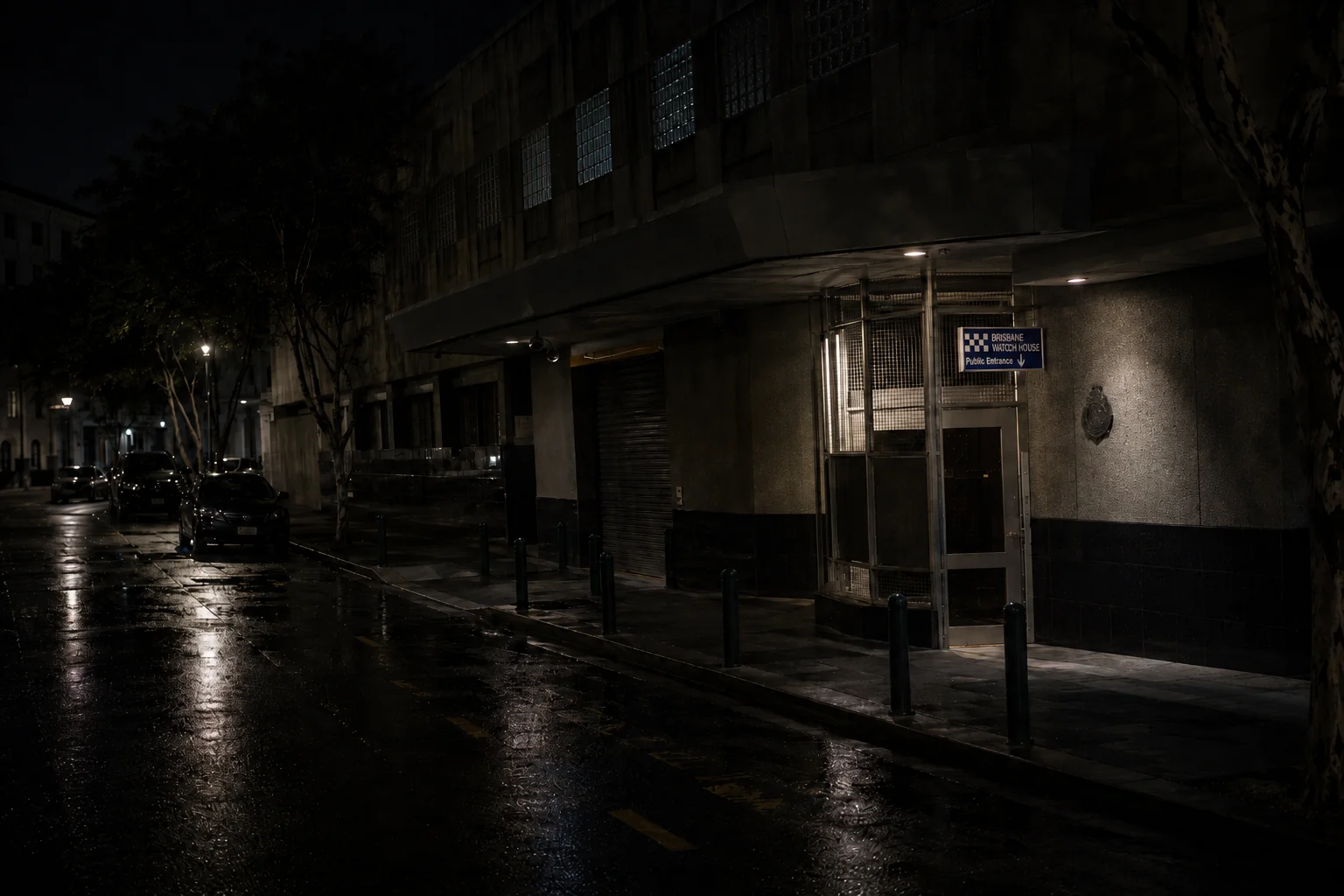
Making a bail application in the Magistrates Court or Supreme Court is a vital step that many people get wrong. Using an inexperienced lawyer inevitably means bail is refused, and those people end up spending time in jail that they would never have to serve.
At George Criminal Lawyers, we are experienced and successful bail lawyers. We know exactly what needs to be done to secure a release from custody. It is essential that you engage our services as soon as possible to do this. We regularly appear in courts all over Queensland, and can attend any Magistrates Court or Supreme Court in Queensland to make an urgent bail application.
What is bail?
In Queensland, bail is a written promise to follow certain conditions while charges progress through the court. For most offences, there are usually no specific bail conditions other than the requirement to attend court. This is called bail “on your own undertaking”.
For more serious charges, or for people with a bad criminal history, bail conditions can be very strict. They might include no-contact conditions, requirements to report to police every day, conditions about where they can live, curfews, restrictions on use of mobile phones and computers, and wearing electronic ankle monitors. Sometimes a deposit of money is required, or another person (called a “surety”) agrees to forfeit money if the conditions are broken, to secure compliance with bail conditions.
Refusal of bail
After police charge someone with a criminal offence, they have to make a decision about whether to release them on bail. For some charges (such as choking offences, certain domestic violence offences, and serious offences involving weapons), the law reverses the usual presumption: the person must “show cause” why their detention in custody is not justified, and police will almost always refuse bail so that a court decides the question. If you get on to us early enough, we might be able to negotiate conditions with police to ensure that they grant you bail.
If the police choose to refuse bail, they prepare a document called an “Objection to Bail” which contains a summary of the facts and their reasons why they believe bail shouldn’t be granted. Quite often, the information in this document is based on incomplete investigations, or contains opinions from police which aren’t backed up by any evidence.
The matter is then listed before a Magistrate the same day, or the next day depending on the time of arrest (between Monday and Saturday). The person is kept in the police watchhouse to await their first court appearance.
What is a “show cause” offence?
Under section 16(3) of the Bail Act 1980 (Qld), a defined list of more serious charges reverses the usual position on bail: instead of the prosecution having to justify detention, you must “show cause” why your continued detention is not justified. The list includes (among others) indictable offences allegedly committed while already on bail or awaiting trial for another indictable offence, offences involving a firearm or offensive weapon, certain domestic violence and strangulation-type offences, and charges carrying a mandatory life or indefinite sentence (which also mean only the Supreme Court can grant bail). Being on the show-cause list doesn’t mean bail is automatically refused; it means the burden shifts to you, which is exactly the argument we prepare for as early as possible. For the full test (including the separate “unacceptable risk” assessment that applies to every application, show-cause or not), see our detailed guide, How Bail Works in Queensland.
A new law is being proposed: the Breach Bail, Go to Jail Bill
On 27 August 2026, the Queensland Government introduced a Bill that would make breaching bail by committing specific serious offences a separate, standalone offence, carrying a mandatory minimum of one year actually served in custody. It would also make bail much harder to get for anyone charged with one of those offences while already on bail for anything else. This is a Bill, not yet law, currently before a parliamentary committee with a proposed commencement of 30 November 2026. It would not change anything for a first bail application. Read our full breakdown of what the Breach Bail, Go to Jail Bill proposes and who it would affect.
What happens if bail is refused?
If a Magistrate refuses bail, or grants it on conditions that can’t be met, that isn’t the end of the road. The usual next step is a fresh application in the Supreme Court, built on comprehensive affidavit evidence: from family, employers, treating professionals, and proposed accommodation or rehabilitation providers. A further application in the Magistrates Court is also possible if circumstances genuinely change. For example, a surety comes forward or a rehabilitation placement becomes available. We act on both Magistrates Court and Supreme Court applications; see the steps below.
Step 1: Bail Act Applications in the Magistrates Court
If bail is refused by police, the first step is for us to apply for bail in the Magistrates Court. We prepare the matter by getting a copy of the Objection to Bail documents and any other evidence being relied on. We speak to our client in the watchhouse and prepare our submissions to the court, ensuring that we’ve covered every relevant risk factor to secure a release from custody.
Quite often we can negotiate with police before court starts to address any risks and ensure a smooth release. And if that can’t be done, we fight hard in court to convince the Magistrate why bail should be granted.
Conditions like a surety (offer of money), secured accommodation, placement in a rehabilitation centre and other conditions like curfews can often get a bail application over the line.
Step 2: Bail Act Applications in the Supreme Court
If bail is denied in the Magistrates Court, the next step is to apply for bail in the Supreme Court. A lot of work goes in to preparing these applications to ensure that the opportunity is not lost because there isn’t enough information for the Judge.
Our job is to get our clients out as soon as possible, so we prepare detailed affidavits which we fill with comprehensive evidence to build the strongest possible case for release. We speak to partners, family and employers, and organise referrals to places such as drug rehabilitation centres. We aggressively negotiate conditions with the DPP to try and secure a release, and if they won’t agree, make the application before a Supreme Court Judge.
Why you need George Criminal Lawyers
We regularly appear in courts all over Queensland to make bail applications. We know exactly what needs to be done to secure a release, and we have a strong track record in Supreme Court bail applications.
If a loved one is in police custody, you need to act immediately to secure their release before a wasted attempt at bail is made by an inexperienced or unprepared lawyer. Read more about what happens at a first court date, or contact us now for a quote so we can get straight to work.
Frequently asked questions
Can I apply for bail again if it’s refused?
Yes. If a Magistrate refuses bail, you can apply again in the Magistrates Court where your circumstances genuinely change (for example, a surety comes forward or a rehabilitation placement becomes available), or apply afresh in the Supreme Court, which is the usual next step after a Magistrates Court refusal. A Supreme Court application is generally the stronger option because it is built on comprehensive affidavit evidence, rather than repeating an argument that has already failed once. For the full detail on how each pathway works, see our guide to how bail works in Queensland.
How long does a bail application take?
The first bail decision happens fast: after police refuse bail, the matter is listed before a Magistrate the same day or the next available court day, and the person is held at the watchhouse until then. A Supreme Court application takes longer to prepare properly, because it relies on detailed affidavit evidence from family, employers, treating professionals and proposed accommodation or rehabilitation providers, but it can be brought on urgently where the circumstances call for it.
Does being refused bail mean I’ll be found guilty?
No. A bail decision is about managing risk while your case is heard, not about guilt, and being refused bail is not evidence against you at any later trial or sentence.
Real client outcomes
Bail Granted: Drug Supply While Already on Bail
A client was charged with supplying dangerous drugs while already on bail for drug trafficking, and police refused bail. Alleged offending of that kind while on bail put him in a show cause position: he had to satisfy the court that his continued detention in custody was not justified. We carefully analysed the police material to identify the weaknesses in the prosecution case, and prepared a comprehensive draft bail order with conditions squarely addressing the risk of reoffending, including rehabilitation and drug testing. Despite strong police objection, the Magistrate was persuaded and our client was granted bail.
Bail Granted: Supreme Court Application (CEM)
A client was charged with repeat child exploitation material offences and refused bail in the Magistrates Court. We applied for bail in the Supreme Court and were initially refused. We did not leave it there: we prepared a second application, arguing that a change in circumstances justified release. The second application succeeded, and our client was granted bail on strict conditions.
Worried about what happens next?
Speak confidentially with an experienced criminal defence lawyer. No judgement, no obligation. Available 24/7 for urgent matters.